
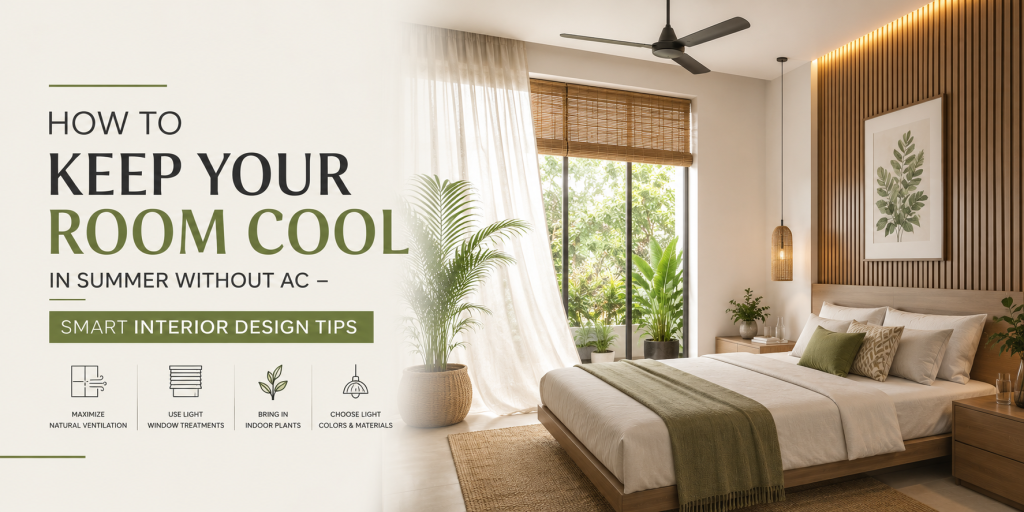
It’s a significant challenge in places like Gurugram, where summer temperatures are generally above 40°C which makes ensuring the insulation of the interior heat comfort quite challenging. Smart Interior Design can help address this issue. Air conditioning is one of the nice-to-have options when the only problem is the electricity and the long-term energy cost of running air conditioning is not realistic in the future.That is where we come in.
We are able to reduce the indoor temperature to a considerable extent without a mechanical system to make the indoor temperature cool with research-based design tools like heat control, airflow management, material choice etc. Realistic, intelligent interior design techniques – for instance to design cool and energy-efficient residential domiciles – are reviewed by the expert and business professionals (any interior design company in Gurugram etc.)
Understanding Heat Gain in Residential Spaces
Before applying solutions, one should explain how heat gets in and builds up in a space.
Primary Sources of Heat Gain:
- Solar power from walls and windows
- Absorption of heat from dark surfaces
- Poor ventilation and entrapped air
- Heat generated by electrical appliances
Smart Interior Design aims to downplay these factors through careful planning and choice of the materials to be used.
Smart Interior Design Strategies to Reduce Indoor Temperature
- Surface reflection and color selection
The warmth of a room is directly influenced by its surface color and finish.
Technical Insight:
Light surfaces reflect heat better and are thus more likely to be considered at higher SRI (Solar Reflectance Index), therefore absorb less heat.
Recommended Applications:
- For walls and ceilings, use very high-reflectance paint
- Apply matte or satin finishes to lessen the absorption of heat
- Use light-coloured furniture and decor
It does this only by putting the light on so it lowers the indoor temperatures between 2 and 4°C.
- The treatment of windows and solar heat management
Windows enable dramatic solar heat capture, particularly in the majority of the rooms which have west and south-facing rooms.
Effective solutions:
- Install blackout curtains (and thermals) that are insulated
- Use bamboo or wooden blinds to shade your window; insulating your window against the sunlight and soaking it up with wood or bamboo to protect you
- Impeding UV and infrared with a reflective film on window surfaces
Before you suggest anything you will be checking window orientation by a professional interior design company in Gurugram.
- Air flow engineering and cross ventilation
The proper amount of air exchange is critical for ensuring thermal comfort. Indoor air is trapped in spaces with inadequate ventilation.
Design Considerations:
- Ensure cross ventilation on opposing walls
- Keep paths of airflow open
- Use ventilated partitions or jali designs where possible.
Technical benefit:
Having cross ventilation helps remove accumulated heat, so that outside air later on in the day and in the early hours is cooler than when you arrived.
- Selection of Materials for Heat Efficiency
Materials have different properties when it comes to heating or cooling. Selecting materials can greatly influence temperature inside.
Suggested materials:
- Cotton and linen for soft furnishings (low thermal retention)
- Engineered wood as opposed to solid hardwood (less heat storage)
- Natural fibers for upholstery
Avoid fabrics made out of synthetic items, fabrics that can be too dense to hold heat.
- Surface Area With Low Thermal Mass
Heat is stored or quickly dissipated in flooring materials.
Ideal Flooring Options:
- Marble
- Ceramic or vitrified tiles
- Natural stone (Kota, granite)
And in particularly hot summers when these materials are kept cool, their temperature will remain a reasonable degree to the air and overall thermal comfort will be improved.
- Plants indoors and Climate Control
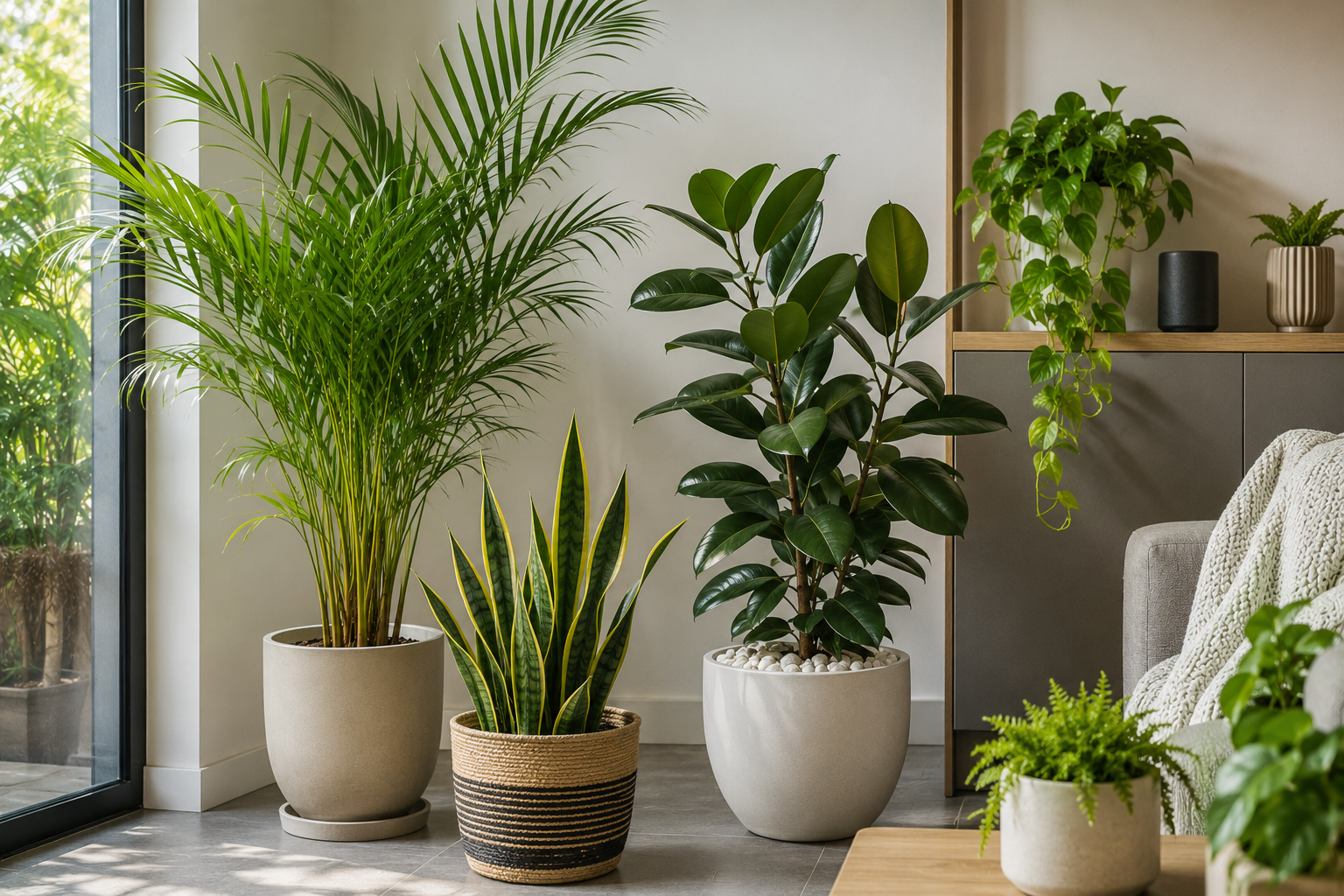
Some plants in indoor space, for example, help passive cooling through transpiration.
Functional Benefits:
- In dry climates, keep the humidity a little bit higher
- Improve indoor air quality
- Reduce perceived temperature
Suitable Plant Types:
- Areca Palm
- Snake Plant
- Rubber Plant
While the cooling factor is rather low, the indoor comfort overall is enhanced.
- Space Planning and Heat Distribution
Poorly planned space can create uneven heat and airflow limitations.
Smart Planning Techniques:
- Don’t overcrowd the space
- Keep circulation routes open
- Furniture is well removed from windows
Not only are simple layouts beautiful, they also work to open up better air circulation.
- Lighting design results in heat transfer
Interior heat gain may also be influenced by lighting fixtures.
Technical Comparison:
- Incandescent bulbs turn some 90 percent of energy into heat
- LED lights generate little or no heat and are extremely energy efficient
Recommendation:
Adopt LED lights with a cool color temperature (4000K–6500K) fully to be as energy efficient as possible.
- Thermal Sealing and insulation
Blankets and openings open gaps can let hot, externally in hot and open air to fill continuously.
Key Interventions:
- You will weather stripping of the window and door seal at the window and door seals
- In place, use insulated doors
- Door sweeps keep hot air out
This further streamlines the efficiency of all other cooling approaches.
- Reducing the Internal Heat Load
Internal sources of heat can greatly increase the room air temperature.
Common Sources:
- Kitchen appliances
- Electronic devices
- Lighting systems
Best Practices:
- Limit appliance use during peak heat periods
- Utilize energy-saving technologies
- Turn off unused electronics
This is just one component of one of the pillars in Smart Interior Design to minimize internal heat load.
What is the role for an interior design firm in Gurugram?
Although personal enhancements can be beneficial for people along the path, a comprehensive approach requires trained specialists in a holistic solution.
Gurugram 3S Buildcon, an experienced professional interior design firm that specializes in interior design that has developed solutions and technical solutions in structural aspects and building the proper engineering, but through engineering, in the technical and structural sense of means it addresses the problem.
Professional Services Include:
- Climate-based design scheduling for design in response to climate-friendly design
- Material and finish selected based on thermal property
- Airflow space optimization
- Integrating passive cooling solutions
Such a method guarantees a better long term comfort, energy reduction and more valuable property.
Common Design Mistakes That Increase Heat
Even the best homes can overheat due to poor decisions.
Avoid the Following:
- The dark wall finishes where the sun is shining
- Fluffy curtains that obstruct the airflow
- Overuse of wooden paneling
- Lack of planning for ventilation; it lacks adequate ventilation
Improving on these issues can have a major effect indoors.
Conclusion
The ability to keep your home cool without the aid of AC is not merely practical; It’s also a sustainability issue. Smart interior design in terms of mirroring heat through the windows, optimizing air flow and choosing material choice ensures living conditions stay good for homes even when summer temperatures soar to all-time highs.
Homeowners and businesses in Gurugram will realize the benefits of the strategies after consulting from a qualified interior design company specialized in Gurugram. A good space is beautiful to look at, and effective all year.